Amicus Curiae Brief:
Standards of United States Federal Constitutional Law and International Law on the obligation to combat impunity for crimes against humanity, drug trafficking, arms trafficking, and human rights violations:
In re: (Indictment) against Nicolás Maduro, in the Southern District of New York.
Case filed Case No. 1:11-cr-00205-AKH) fka S4 11 Cr. 205. S2 11 Cr. 205 (AKH).
UNITED STATES OF AMERICA – v. – SUPERSEDING INDICTMENT NICOLAS MADURO MOROS, S2 11 Cr. 205 (AKH) DIOSDADO CABELLO RONDON, HUGO ARMANDO CARVAJAL BARRIOS, a/k/a “El Pollo,” CLIVER ANTONIO ALCALA CORDONES, LUCIANO MARIN ARANGO, a/k/a “Ivan Marquez,” and SEUXIS PAUCIS HERNANDEZ SOLARTE, a/k/a “Jesfis Santrich,” Defendants.
SOUTHERN DISTRICT COURT OF NEW YORK. Honorable Judge Alvin Hellerstein.
Re: Amicus Curiae Brief presented in Pro Se by Humphrey John Pachecker Barrera and Humphrey Humberto Pachecker Cardenas.
INSTITUTIONS SIGNING THE DOCUMENT in PRO SE:
National Association for Foreign Attorneys (“NAFA LAW”) Florida.
University of Academic Homologation UNPAM Florida, San Juan PR.
AICACHR Court Foundation for Due Process Human Rights Research and Homologation Education Centre.
Private institutions which can legally present this amicus curiae brief before the federal court of the Southern District of New York. Requesting the consent and permission of the court itself, as stipulated in Federal Rule of Appellate Procedure 29 (FRAP 29) for appellate courts, and similar practices in federal district courts.
These institutions above cited demonstrate a substantial interest in the case and provide valuable knowledge and information by filing a motion for leave to file if consent is not obtained.
AMICUS CURIAE BRIEF BEFORE THE UNITED STATES DISTRICT COURT FOR THE SOUTHERN DISTRICT OF NEW YORK CASE NO. S4 11 Cr. 205 (1:11-cr-00205-AKH), HUMPHREY JOHN PACHECKER BARRERA AND HUMBERTO PACHECKER BARRERA PRO SE, ET AL, FLORIDA, UNITED STATES.
Honorable Judge Alvin Hellerstein, United States District Court for the Southern District of New York:
We, Humphrey Humberto Pachecker Cardenas and Humphrey John Pachecker Barrera, representing the institutions described below, submit the following brief as amicus curiae in case number S4 11 Cr. 205 (1:11-cr-00205-AKH),
UNITED STATES OF AMERICA – v. – SUPERSEDING INDICTMENT NICOLAS MADURO MOROS, ET AL.
Request to be Considered the Amicus Curiae Brief. We submit this brief for your consideration before the Honorable Judge Alvin Hellerstein, as amicus curiae, to offer a legal analysis of the international obligations of the Venezuelan State under the administration of the accused Nicolas Maduro Moros and other defendants in this case, including United States legal right to prosecute Defendants within the context of serious crimes, drug trafficking, arms trafficking, human rights violations, specifically in relation to attacks against American citizens and Venezuelan citizens, including illegal detentions, torture and abuse of human rights defenders and violations of United States laws protecting U.S. citizens from the sale and distribution of illegal drugs, such as the Controlled Substances Act (CSA) of 1970. Enforced by the Drug Enforcement Administration (DEA), this act regulates the manufacture, distribution, and possession of substances that pose a risk of abuse.
AICAHR COURT is a non-governmental human rights organization [INGO];
UNPAM is a non-profit education and research organization.
NAFA LAW is an association of foreign and local lawyers based in the United States and domiciled at 3200 US Hwy. 27 South, Suite 301, Sebring, Florida 33870.
The purpose of this Amicus Curiae Brief is to support and provide this honorable court with opinions and necessary elements to strengthen the accusations presented by the plaintiff, the United States, against the defendants NICOLÁS MADURO MOROS, DIOSDADO CABELLO RONDÓN, HUGO ARMANDO CARVAJAL BARRIOS, also known as “El Pollo,” CLÍVER ANTONIO ALCALÁ CORDONES, LUCIANO MARÍN ARANGO, also known as “Iván Márquez,” and SEUXIS PAUCIS HERNÁNDEZ SOLARTE, also known as “Jesús Santrich,” accused of participating in a corrupt and violent narcoterrorism conspiracy between the Venezuelan Cartel of the Soles and the Revolutionary Armed Forces of Colombia (“FARC”).
Additionally, this Amicus Curiae Brief also aims to empower all victims and human rights defenders to utilize national and international protection mechanisms to create opportunities for greater protection of human rights and civil rights worldwide.
To present details of the violations and crimes committed by the defendants in this case, including federal law, legal opinions, one of which is the lack of presidential immunity of the main defendant, Nicolás Maduro Moros, in re [refer to] the precedent in the case of Samantar v. Yousuf (2010).
1) ALIEN TORT CLAIMS ACT, 28 U.S.C. Section 1350,
2) TORTURE VICTIM PROTECTION ACT, 106 Stat. 73, 1992. Public Law 102-256 – Torture Victim Act.
The signatories of this brief are Humphrey H. Pachecker Cardenas and Humphrey John Pachecker Barrerar, both U.S. citizens, including representatives of the organizations NAFA LAW, UNPAM, and AICACHR, dedicated to the broad, effective, and informed participation of civil society in education, the defense of human rights, and civil rights.
These organizations are interested in the de jure and de facto protection of the fundamental rights of individuals in civil society who promote initiatives aimed at holding the accused in this case and the Venezuelan State accountable for their actions, achieving justice, and ensuring the enjoyment of human rights, civil rights, and protection against crime and the smuggling of illicit drugs, defined by the World Health Organization (WHO) as substances whose “production, sale, and consumption are prohibited” and which can cause death and changes in the state of consciousness, mood, thought processes, and motor functions of individuals who use them within their territory.
Furthermore, the aforementioned institutions, Humphrey John Pachecker Barrera and Humphrey H. Pachecker Cardenas, signatories of this amicus brief, have a particular interest in ensuring that the state, federal, and international duty to guarantee human rights, civil rights, and general protection against death from illicit drug commercial use by criminals is clearly defined so that the justice systems of the United States, the States, and their governments can be aware of and fulfill their obligations in this regard, including in current or exceptional situations and in the context of violations and crimes committed against American citizens and Venezuelan citizens, human rights defenders, and the general public, including Venezuelan citizens residing in the United States.
In this specific case, it is pertinent to elaborate on the legal basis for such obligations, given that it is understood that American and Venezuelan citizens, human rights defenders, and the general public continue to be victims of attacks resulting from the criminal actions of the Defendants.
Objective of the Amicus Curiae Brief:
If this intervention is accepted, it is expected that the information and arguments provided in this Amicus Curiae Brief will assist this honorable esteemed Court in resolving this case and in defining the national and international obligations of the American States and in this hemisphere.
Our amicus curiae brief focuses on three main aspects: first, the constitutional and legal foundations of the United States’ sovereign prerogative to protect its citizens from foreign criminal elements.
Historically and in current practice (2026), the Supreme Court has consistently upheld the doctrine of plenary power, which holds that the power to admit or exclude foreigners is a fundamental act of sovereignty inherent in the executive and legislative branches.
We analyze how this authority is interpreted to prioritize national security and public safety over individual requests for entry into the country; and second, the interpretation of the American Convention on Human Rights, examining the scope of the state’s obligations to guarantee the enjoyment of protection to American citizens and the protection of human rights to life, personal integrity, and freedom of association.
Third, we will analyze the special obligations that correspond to the Venezuelan State and the defendants in this case with respect any and all citizens, to human rights defenders, particularly when they are in a situation of risk.
In 2024-2025, approximately 80,400 to 84,000 people in the United States died from drug overdoses, representing a significant decline from the record high of nearly 111,000 deaths in 2023. While federal agencies frequently attribute the vast majority of these deaths to illicit drugs trafficked by cartels—specifically synthetic opioids like fentanyl—official mortality data tracks deaths by substance type rather than the source of the drug.
Recent Mortality Trends (2024–2026)
Total Annual Deaths: Provisional data for the 12 months ending in October 2024 showed 84,076 deaths, a 25% decrease from the previous year. Projections for the 12-month period ending in April 2025 further decreased to roughly 76,500 deaths.
Synthetic Opioids (Fentanyl): Illicitly manufactured fentanyl remains the leading cause of drug-related deaths. It was involved in over 76,000 deaths in 2023 but dropped to approximately 48,000 to 49,000 in 2024.
Stimulants: Deaths involving psychostimulants (primarily methamphetamine) totaled roughly 29,456 in 2024, while cocaine-related deaths accounted for about 22,174.
Cartel Involvement and Supply Factors.
Primary Drivers: The DEA and other agencies link the current “overdose crisis” to the mass production and smuggling of synthetic drugs by international cartels.
Supply Shifts: A sharp decline in overdose deaths beginning in late 2024 and continuing into 2026 has been attributed to a “shock” to the illicit supply, specifically a decrease in fentanyl potency and purity.
Lethality: The high death rate is driven by the extreme potency of cartels’ products; for instance, a “pencil-tip” amount of fentanyl can be lethal.
Historic Context.
Year Total Estimated Overdose Deaths Primary Driver
2022 107,941 (Peak) Synthetic Opioids
2023 110,037 Synthetic Opioids
2024 ~80,400 Synthetic Opioids
2025 (Projected) ~76,500 Synthetic Opioids
For current regional statistics and real-time updates, you can consult the CDC’s Provisional Drug Overdose Data or the DEA’s National Drug Threat Assessment.
————
1 See. Alien Tort Statute (ATS) (28 U.S.C. § 1350) US Supreme Court: 1. Sosa v. Alvarez-Machain (2004); 2. Kiobel v. Royal Dutch Petroleum Co. (2013); 3. Jesner v. Arab Bank, PLC (2018); 4. Nestlé USA, Inc. v. Doe (2021); The Court further restricted the scope of domestic conduct required to support a claim under the ATS. Insufficient Domestic Conduct: It held that general corporate decision-making within the U.S. (e.g., from a headquarters) is too “common” or “generic” to provide the required connection to the U.S. for an ATS claim involving conduct abroad. Domestic Corporations: While the case was dismissed on extraterritoriality grounds, five justices suggested in their concurring opinions that domestic corporations could still be sued under the Alien Tort Statute (ATS), distinguishing them from the foreign corporations in the Jesner case.
The Torture Victim Protection Act of 1991 (TVPA), enacted on March 12, 1992, as Public Law 102-256 (106 Stat. 73), is codified at 28 U.S.C. § 1350. Since its enactment, several landmark cases have defined the scope and limitations of the TVPA: Mohamad v. Palestinian Authority (2012): The U.S. Supreme Court ruled that the TVPA applies only to natural persons (“individuals”). Samantar v. Yousuf (2010).
No Immunity. Samantar v. Yousuf (2010): The Supreme Court held that the Foreign Sovereign Immunities Act (FSIA) does not shield individual foreign officials from being sued. While officials may still invoke common law immunity, they are not automatically protected by the FSIA. Jesner v. Arab Bank (2018). Jane Does 1-5 v. Obiano (2025). Kadic v. Karadzic (1995): Established that “state action” for purposes of the TVPA can be satisfied by individuals acting “under color of law,” even if they are not part of a formally recognized government (e.g., leaders of self-proclaimed republics).
————
INTRODUCTION…
In this case, this Honorable Federal Court for the Southern District of New York will rule on the alleged international legal responsibility of the United States to administer justice with respect to charges filed against Defendants of Narco-Terrorism Conspiracy, Cocaine Importation Conspiracy, Possession of Machineguns and Destructive Devices, Conspiracy to Possess Machineguns and Destructive Devices, including additional violent crimes against humanity and attacks carried out by the Defendants in this case against the general population, Defendants who allegedly benefited from the alleged participation and complicity of their agents associated with the Defendants, all crimes committed against United States citizens and Venezuelan citizens. As a result, thousands of people died in these two countries, the United States and Venezuela.
The allegations of the petitioners presenting this amicus curiae brief concern and coincide with the possible failure of the Venezuelan State and the Defendants named in this case to fulfill their negative and positive duties related to, inter alia, the rights to life, security and personal integrity, and freedom of association, due to their alleged actions and omissions at the time of the events and the impunity that these Defendants allegedly enjoyed during the following years.
This amicus curiae brief focuses on the obligation to guarantee certain rights enshrined in the United States Constitution and the American Convention on Human Rights, which also entails a duty to investigate serious violations. Since the Defendants were allegedly involved in the administration and governance of the State of Venezuela, and the rights of all citizens inside and outside the country, the case sub judice also concerns the state responsibilities of the Defendants to protect the physical integrity of all citizens, human rights defenders, and to ensure the free exercise of their legitimate activities.
FEDERAL AND INTERNATIONAL CAUSES OF ACTION:
The Alien Tort Statute (ATS), 28 U.S.C. Section 1350 grants U.S. federal courts jurisdiction over civil claims brought by an alien (a person who is not a U.S. citizen, e.g., Venezuelan citizens residing in the United States) for a tort (civil wrong) committed in violation of international law or a U.S. treaty, allowing foreign nationals to seek redress for serious human rights or international law violations in U.S. courts. Enacted by the First Congress, this statute provides a pathway to universal jurisdiction, although its scope has been limited by Supreme Court rulings, which generally require the violation to be of a specific, universal, and obligatory international norm.
Key Components of the ATS: First, the plaintiff: Must be an “alien” (a person who is not a U.S. citizen) but may be located within the United States.
Action: A “civil action for a tort” (a private lawsuit seeking compensation for a civil wrong).
Violation: The tort must violate “international law and/or a treaty of the United States.”
Historical Significance and Evolution: Early History: It was used for nearly two centuries, serving to establish federal authority over foreign affairs.
Resurgence (1980): The landmark case Filártiga v. Peña-Irala expanded its application to modern human rights violations, leading to an increase in litigation.
Modern Limitations: Subsequent Supreme Court decisions, such as in the Kiobel and Nestlé cases, have restricted ATS jurisdiction, limiting its scope for claims occurring extraterritorially (outside the United States) and against corporations.
In essence, the ATS is a jurisdictional statute that allows foreign nationals to sue for serious international wrongs in U.S. federal courts, thus connecting U.S. courts to the global enforcement of human rights.
On the other hand. The Torture Victim Protection Act of 1991 (TVPA), Public Law 102-256, allows U.S. courts to hear civil lawsuits against individuals who, acting under the authority of foreign law, commit torture or extrajudicial killings, enabling victims (citizens or non-citizens) to seek compensation by establishing liability for the intentional infliction of severe pain or suffering, even if the perpetrators are anonymous. It requires and…
VIOLATIONS CONTINUE:
During January 2025 in Venezuela, the exercise of the right to legal defense for those detained for political reasons faced serious restrictions and risks of further detention.
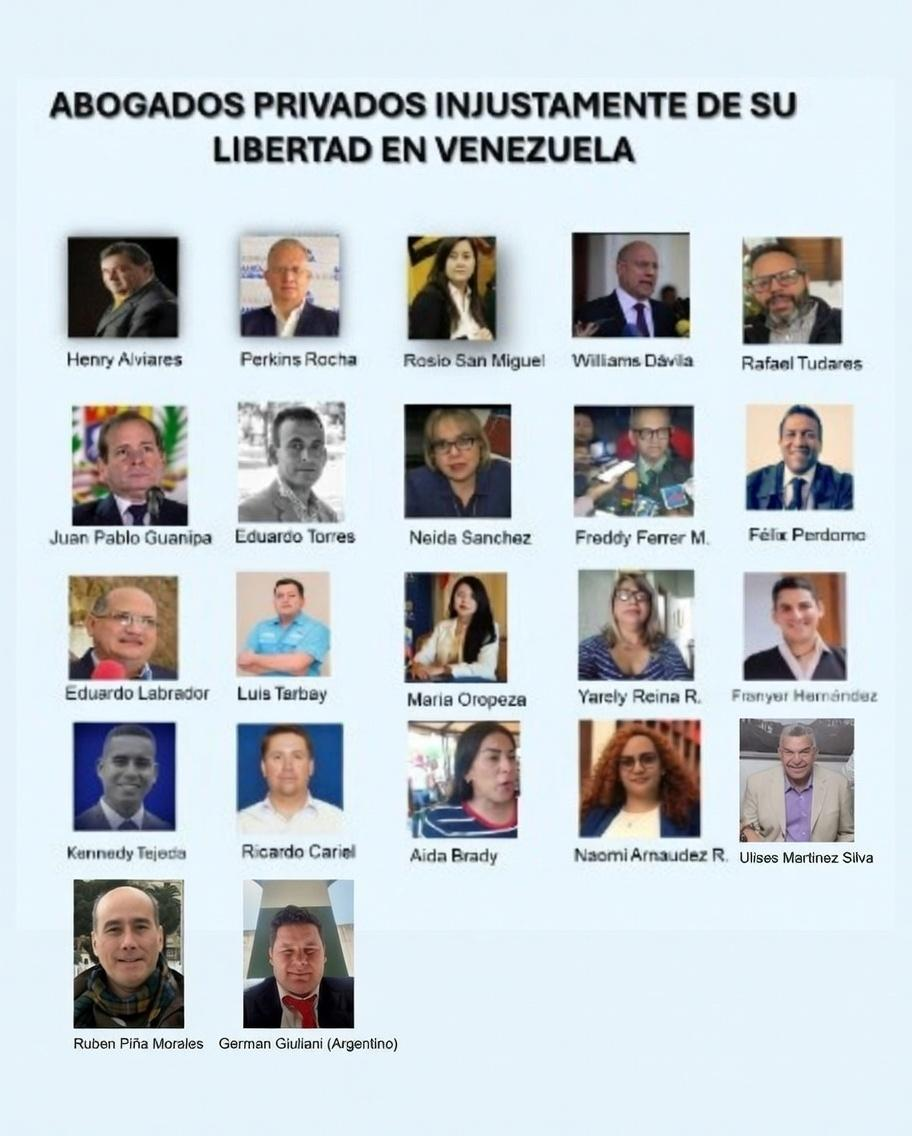
Detained lawyers: It was reported that at least 22 lawyers remained political prisoners under the Venezuelan judicial system at the beginning of 2026, reflecting a pattern of detentions that intensified during 2025 after the post-election crisis. A notable example in subsequent months was the detention of lawyer and former congressman Juan Pablo Guanipa in May 2025.
Criminalization of defense: In the first days of January 2025, human rights organizations such as Foro Penal registered an increase in political persecution, raising the number of new detainees to 75 in just the first 11 days of the year. Activists warned that lawyers and journalists were among the sectors systematically targeted to dismantle support networks for the opposition.
Legal obstacles: During 2025, it was reported that many detainees were denied the right to visits from their legal representatives and were held incommunicado. Families of political prisoners publicly demanded the right to have lawyers of their choosing, as the State imposed public defenders who did not guarantee an effective defense.
Context of 2026: By January 2026, following drastic changes in the Venezuelan government and the capture of Nicolás Maduro by U.S. forces at the beginning of the month, a phase of prisoner releases began. Among the first to be released were human rights lawyers, activists, and journalists who had been imprisoned during the previous period of repression.
[Esta es solo siete [7] paginas de 48 de este ‘Amicus Curiae Brief’ las cuales restantes paginas todas ahora están siendo revisadas para corrección y traducirlas al inglés]
[Seguido la carta de presentación requerida ante el juez quien lleva este caso]
===============================================================.
3200 US HWY. 27 SOUTH- SUITE 302
SEBRING FLORIDA 33870
Tph: 1-863-345-0618
Email: nafa@nafalaw.com
February 01, 2026
Honorable Judge Alvin K. Hellerstein
Daniel Patrick Moynihan United States Courthouse
Courtroom: 26A
500 Pearl Street, Room 120
New York, NY 10007-1312
Re: Case Name and Docket Number- United States v. Nicolás Maduro Moros, et al. (Case No. 1:11-cr-00205-AKH),
Dear Judge Hellerstein:
Pursuant to Court Rule, e.g., Fed. R. App. P. 29, we Humphrey J. Pachecker Barrera; Humphrey H. Pachercker Cardenas, together with Organizations NAFA LAW, UNPAM and AICACHR respectfully moves this Court for leave to file the attached amicus curiae brief in support of Plaintiff.
Interest of Amicus Curiae:
We, above described as well described in the amicus curiae brief as acting in Pro se. The outcome of this case will significantly impact millions of citizens as well will impact several hundred members of NAFA LAW all Venezuela’s citizens .
Reasons for Leave to File:
This brief will assist the Court by addressing several legal issues including factual issues all better described in the amicus curiae brief.
Unlike the primary parties, the Amicus offers a unique perspective on, historical context, scientific data including details of several torts as violations of all basic universal human rights that all are relevant to the disposition of this case.
Amicus has put on notice counsel for Party A, The United States of America] requesting consent to this filing; Party B, Defendants legal representatives have not yet responded.
Respectfully submitted,
Signature of Humphrey J. Pachecker Barrera and Humphrey H. Pachecker Cardenas
Humphrey J. Pachecker Barrera; Humphrey H. Pachercker Cardenas
Contact phone number: 863-345-0618- Email: nafa@nafalaw.com
- Attached hereto please find the proposed amicus brief attached to the motion requesting authorization.
[Seguido la Moción de presentación requerida ante el juez quien lleva este caso]
IN THE UNITED STATES DISTRICT COURT FOR THE SOUTHERN DISTRICT OF NEW YORK
Case No. Case No. 1:11-cr-00205-AKH)
MOTION
THE UNITED STATES OF AMERICA – v. – NICOLAS MADURO MOROS, et al.,
BRIEF AMICUS CURIAE
TABLE OF CONTENTS Page TABLE OF AUTHORITIES. . . . . . . . . . . .1
INTEREST OF THE AMICI CURIAE . . . . . . . . . . . . . . . . . . . . . . . . . . . . . . . . 2-10
STATEMENT OF THE CASE . . . . . . . . . . . . . . . . . . . . . . . . . . . . . . . . . . . . . . 11-21
STATEMENT . . . . . . . . . . . . . . . . . . . . . . . . . . . . . . . . . . . . . . . . . . . . . . . . ………….22-34
SUMMARY OF ARGUMENT. . . . . . . . . . . . . . . . . . . . . . . . . . . . . . . . . . . …… 35-48
ARGUMENT…
TABLE OF AUTHORITIES STATUTES…
8 U.S.C. § U.S.C. § 1225(b)(1) . . . . . .
U.S.C. § 1252(a)(2)(B)(ii). . . . .
MISCELLANEOUS…
INTEREST OF THE AMICI CURIAE…
STATEMENT OF THE CASE…
STATEMENT…
SUMMARY OF ARGUMENT…
CONCLUSION…
================================================================.
Seguido regla: Instructions general information to filing amicus curiae brief and motion.
In the Southern District of New York (SDNY), the local rules for filing an amicus curiae motion as of 2026 are primarily governed by Local Civil Rule 7.1 and the individual practices of the presiding judge.
Filing Procedures:
- Motion for Leave: Except for government entities (e.g., the United States or a State), non-parties must obtain permission from the court by filing a motion for leave to file an amicus brief.
- Accompanying Brief: The motion for leave must be accompanied by the proposed amicus brief itself.
- Letter-Motions: Under current 2026 local rules, many non-dispositive applications are filed as letter-motions via the Electronic Case Filing (ECF) system. You should verify if the specific judge permits amicus requests via letter-motion or requires a formal notice of motion.
Substantive Requirements:
The motion must demonstrate why the amicus participation is relevant and useful to the court. It typically includes:
- Statement of Interest: Identification of the movant and their specific interest in the case.
- Reasons for Desirability: An explanation of why the amicus brief is desirable and how the matters asserted are relevant to the case’s disposition.
- Disclosure Statement: A statement indicating whether any party’s counsel authored the brief or if any party or person other than the amicus contributed money to fund its preparation.
Formatting and Deadlines:
- Word and Page Limits: Local Civil Rule 7.1(c) establishes default lengths for memoranda. As of 2026, standard memoranda are generally limited to 8,750 words for principal briefs, though individual judges often set stricter limits (sometimes as few as 10–25 pages) in their Individual Practices.
- Table of Contents/Authorities: Any memorandum 10 pages or longer must include a table of contents and a table of authorities.
- Timing: While federal appellate rules often require amicus briefs within 7 days of the supported party’s brief, the SDNY trial court typically sets deadlines via specific scheduling orders or requires the motion to be filed while the underlying issue is still being briefed.
Key Requirements for 2026:
- Format: Documents must be 12-point type, double-spaced, with one-inch margins. Footnotes may be 10-point type.
- Method of Filing: Most SDNY judges require requests for leave to be filed as letter-motions on ECF, typically limited to 3 single-spaced pages excluding exhibits.
- The Attachment: The proposed amicus brief must be attached as an exhibit to the motion.
- Individual Rules: Always check the Individual Practices of the specific judge assigned to the case, as many SDNY judges have unique requirements for amicus submissions
Crucial Step: Check Individual Judge’s Rules:
SDNY judges have significant discretion over amicus participation. You must consult the Individual Rules and Practices of the judge assigned to your case, as they may have specific requirements for amicus submissions that supersede or supplement the general local rules.
In the ongoing case of U.S. v. Nicolas Maduro Moros (Case No. S4 11 Cr. 205) in the Southern District of New York (SDNY), the presiding judge and the associated clerk’s office mailing address as of January 2026 are as follows:
Presiding Judge:
- Judge: Honorable Alvin K. Hellerstein
- Courtroom: 26A, located in the Daniel Patrick Moynihan United States Courthouse
Judge Hellerstein, a senior U.S. District Judge appointed in 1998, has presided over this case since the initial indictment of a co-defendant in 2011. On January 5, 2026, he presided over the arraignment where Maduro pleaded not guilty to narco-terrorism and drug trafficking charges.
Clerk’s Office Mailing Address:
For filing documents or correspondence related to the case, materials should be sent to the Clerk of Court at the Manhattan office of the SDNY:
- Office Name: Clerk of Court
- Building: Daniel Patrick Moynihan United States Courthouse
- Address: 500 Pearl Street, Room 120
- City, State, Zip: New York, NY 10007-1312.
Important Note for Filings: When mailing documents, it is required to include the docket number (11 Cr. 205), the judge’s initials (AKH), and, if applicable, your attorney code. For general inquiries, the Clerk’s Office can be reached at (212) 805-0136.
In the criminal case United States v. Nicolás Maduro Moros, et al. (Case No. 1:11-cr-00205-AKH), Judge Alvin Hellerstein has not issued a specific order regarding the acceptance or rejection of amicus curiae (friend of the court) briefs as of early January 2026.
The following factors govern his approach to such filings:
- Discretionary Authority: In federal district courts, there is no automatic right to file an amicus brief. Judge Hellerstein has the broad discretion to permit or deny these filings based on whether he believes they provide information that is both “timely and useful” to the court’s decision-making.
- Standing Rules: Judge Hellerstein’s Individual Practices (updated as of October 23, 2025) do not explicitly address amicus briefs. This typically means that any party wishing to file one must first file a motion for leave (permission) to do so.
- Judicial Demeanor: Judge Hellerstein is noted for strictly separating political rhetoric from legal principles and prioritizing swift, principle-focused proceedings. In criminal cases, judges often limit amicus participation more strictly than in civil cases to avoid complicating the rights of the defendant or the government’s prosecution.
- Current Case Status: As of January 5, 2026, Nicolas Maduro Moros has been arraigned and entered a plea of not guilty. The next major hearing is scheduled for March 17, 2026. Any potential amicus curiae filers would likely seek to intervene during upcoming motions regarding sovereign immunity or the legality of Maduro’s capture.
Normalmente esta Corte bajo este juez Honorable Alvin K. Hellerstein permite radicar estos escritos ‘Amicus Curiae’ 60 dias antes del juicio primeva vista está señalada para Marzo 2026.
Cual es el propósito de presentar un ‘brief Amicus Curiae’ en el caso de USA V. NICOLAS MADURO, ET AL?
Primero: Somos abogada/os y conocemos la ley la cual en NAFA LAW, considerando que somos una Institución anti comunista [100%] la cual No acepta miembros comunistas ni ateos- también tenemos una segunda responsabilidad con el pueblo de Venezuela y con nuestros miembros y asociados venezolanos:
En el caso penal de Estados Unidos contra Nicolás Maduro y otros, el propósito de presentar un escrito de amicus curiae (“amigo de la corte”) es proporcionar al tribunal perspectivas legales, fácticas o políticas adicionales de partes no involucradas que puedan influir en el resultado del caso.
Tras la captura de Nicolás Maduro por las fuerzas estadounidenses en enero de 2026, los escritos de amicus curiae en este caso específico pueden abordar varias cuestiones legales críticas e inéditas:
Inmunidad de Jefe de Estado: Los amici curiae pueden presentar argumentos sobre si Maduro tiene derecho a la inmunidad soberana. Si bien el derecho internacional generalmente protege a los jefes de Estado de ser arrestados, el gobierno estadounidense no ha reconocido a Maduro como el líder legítimo de Venezuela desde 2019, un factor a menudo decisivo en los tribunales estadounidenses.
Validez jurisdiccional: Los escritos pueden analizar si los tribunales estadounidenses tienen jurisdicción adecuada tras un secuestro forzoso en territorio extranjero. Expertos legales señalan precedentes como el caso Estados Unidos contra Álvarez-Machain (1992) y el caso de Manuel Noriega para argumentar que tales secuestros no necesariamente impiden el enjuiciamiento penal.
Implicaciones del derecho internacional: Diversas organizaciones pueden presentar escritos para destacar las consecuencias más amplias de la operación estadounidense en el orden jurídico global, incluidas posibles violaciones de la Carta de las Naciones Unidas y de la soberanía venezolana.
Derechos humanos y rendición de cuentas: Grupos de derechos humanos, como el Centro Vance, utilizan los escritos de amicus curiae para garantizar que el régimen de Maduro no eluda la rendición de cuentas por las presuntas violaciones de derechos humanos y para instar a los tribunales a mantener la jurisdicción en los procedimientos internacionales relacionados.
Poder Ejecutivo frente a Poder Judicial: Los amici curiae pueden abordar las preocupaciones constitucionales sobre si el poder ejecutivo excedió su autoridad, particularmente dado que el Congreso no aprobó explícitamente la operación militar que condujo a la captura de Maduro... CONTINUARA…
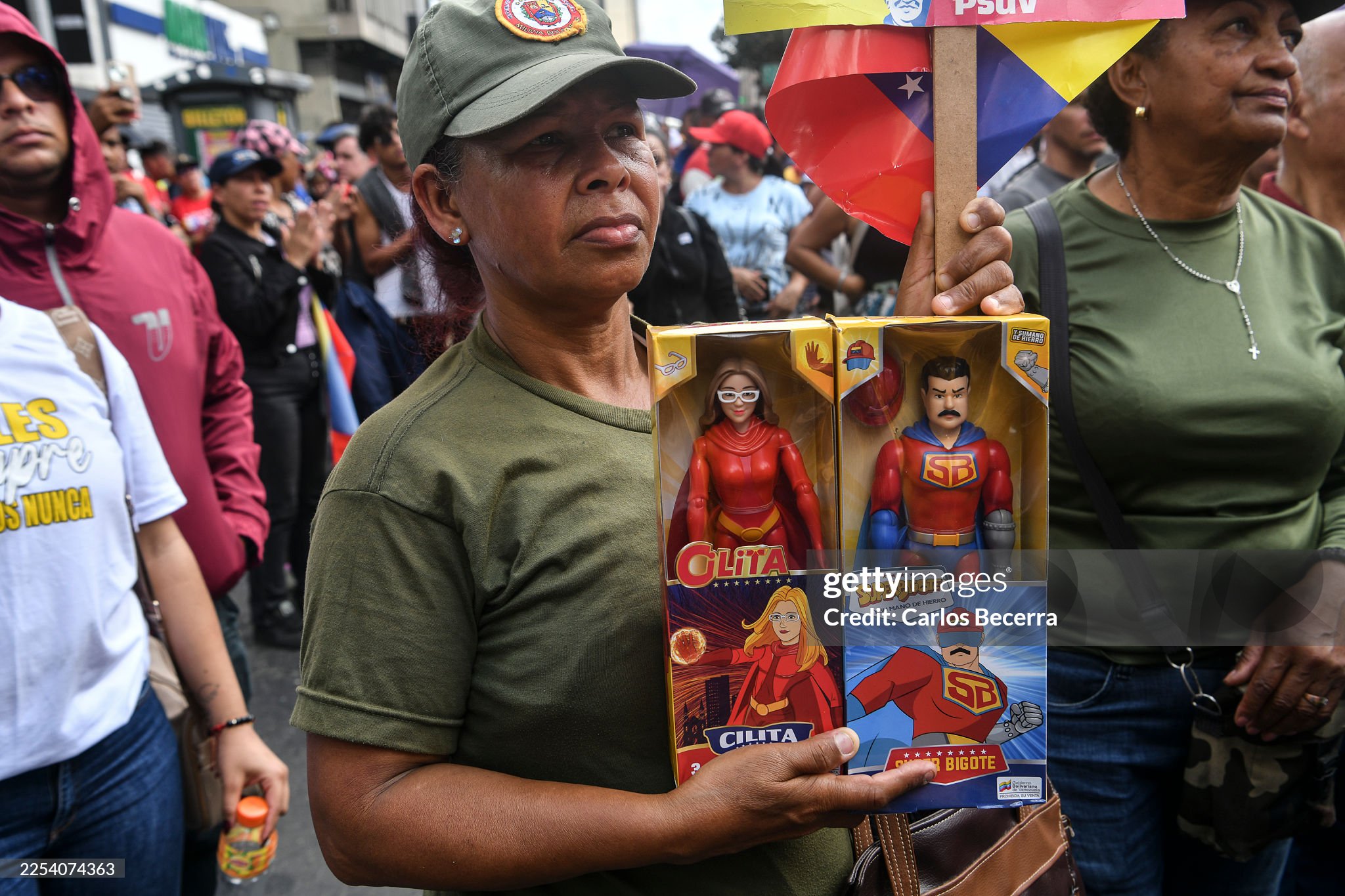
In 2026, libraries and schools continue to operate under key legal exceptions that allow for the use of copyrighted images, photos, and videos without direct permission in specific contexts.
Educational & Library Copyright Exceptions
- Face-to-Face Teaching (Section 110(1)): Educators and students can perform or display all types of copyrighted works in a physical classroom at a non-profit institution. This includes showing full movies, projecting photos, and playing music for instructional purposes.
- Fair Use (Section 107): This broad exception allows for the use of copyrighted material for purposes such as criticism, comment, news reporting, teaching, scholarship, and research. Use is evaluated based on four factors:
- Purpose and character of the use (e.g., non-profit vs. commercial).
- Nature of the copyrighted work.
- Amount and substantiality of the portion used.
- Effect of the use upon the potential market.
- TEACH Act (Section 110(2)): Governs online instruction, allowing for the “performance of a nondramatic literary or musical work” or “reasonable and limited portions” of other works (like videos) in digital transmissions.
- Library Exceptions (Section 108): Permits libraries and archives to make specific reproductions for preservation, replacement, or for researchers, provided the use is not for commercial advantage.
Visual Resources for Educational Use. Below are infographics and charts summarizing these copyright rules and fair use guidelines for educational settings.